
Are you curious about the difference between red light therapy and infrared saunas?
Many people often confuse these two forms of therapy, but they are not the same thing.
Red light therapy involves exposing your body to red LED lights to stimulate cellular activity and promote healing.
On the other hand, an infrared sauna uses infrared heat to raise your body’s temperature, inducing sweat and detoxifying your body.
While both therapies offer various health benefits, they work in different ways.
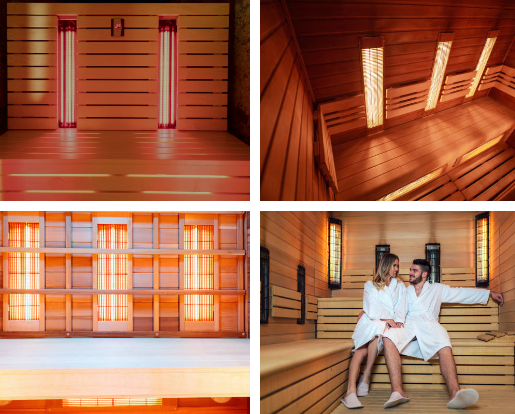
Red light therapy can enhance infrared saunas by incorporating red LED lights into the sauna. However, not all infrared saunas have red lights.
Understanding the distinction between red light therapy and infrared saunas is crucial in determining which option best suits your needs and goals.
So, let’s delve into the details and explore the health benefits and differences between these two therapies.
What is an infrared sauna?
If you’ve never experienced the blissful warmth and detoxifying effects of an infrared sauna, you’re missing out on the ultimate relaxation and rejuvenation experience. An infrared sauna uses infrared heaters to emit radiant heat directly absorbed by your body, providing a more intense sweat than traditional saunas.
The heat generated by the infrared sauna penetrates your skin, promoting circulation, relieving muscle tension, and flushing out toxins from your body. This type of sauna operates at a lower temperature than traditional saunas, making it more comfortable and accessible for longer sessions. The infrared rays also have therapeutic benefits, such as reducing inflammation, improving skin health, and boosting your immune system.
So, if you’re looking for a soothing and effective way to relax and detoxify, an infrared sauna is worth trying.
What is red light therapy?
What exactly does this innovative treatment method entail? Red light therapy, also known as photobiomodulation, is a non-invasive therapy that uses low-level red light wavelengths to promote healing and rejuvenation in the body.
It works by penetrating deep into the skin and stimulating the production of ATP, which is the energy source of cells. This ATP production increase helps enhance cellular function and repair damaged tissues.
Red light therapy can treat various conditions, including skin issues like acne and wrinkles, muscle pain and inflammation, and even hair loss. Unlike infrared saunas, which primarily heat the body, red light therapy targets specific areas with light wavelengths to promote healing and therapeutic effects.

Is Red Light Therapy the Same as Infrared Saunas?
Red light therapy and infrared saunas have garnered attention for their potential health benefits in the realm of wellness and alternative therapies. However, despite their similarities, they are distinct modalities with unique mechanisms and applications. Red light therapy and infrared saunas utilize different light spectrum segments to promote well-being, but their methods and effects diverge.

Red Light Therapy
Red light therapy, also known as photobiomodulation or low-level light therapy, involves using low-energy, visible red, or near-infrared light wavelengths to stimulate cellular function. The therapy is often administered through LED panels or laser devices. These wavelengths penetrate the skin and interact with the mitochondria, the energy powerhouses of cells, leading to increased ATP (adenosine triphosphate) production. This process can enhance cellular repair and growth, reduce inflammation, and alleviate skin conditions.
Red light therapy has applications in various fields, including skin rejuvenation, wound healing, pain management, and mood enhancement. It has gained popularity in aesthetic clinics, sports medicine, and home settings due to its non-invasive nature and reported benefits.
Infrared Saunas
Infrared saunas, on the other hand, primarily use infrared radiation to heat the body directly rather than heating the surrounding air, as traditional saunas do. Infrared radiation falls within the invisible portion of the electromagnetic spectrum beyond the red light range. Infrared saunas emit infrared light, primarily far-infrared and near-infrared wavelengths, which penetrate the skin and heat the body’s tissues directly. It induces a deep, detoxifying sweat and may promote relaxation, pain relief, and cardiovascular benefits.
Infrared saunas are often used for relaxation and stress reduction, as well as for detoxification purposes. They are believed to help the body eliminate toxins through sweat and may offer benefits similar to traditional saunas but at lower temperatures.
Key Differences
The critical distinction between red light therapy and infrared saunas lies in their primary mechanisms of action. Red light therapy focuses on cellular stimulation and modulation, while infrared saunas center on heat therapy and detoxification through deep sweating. While both modalities may have overlapping benefits, they are not interchangeable due to their distinct approaches.
In summary, red light therapy and infrared saunas are two distinct methods within the broader spectrum of light-based therapies. Red light therapy employs specific wavelengths to promote cellular repair and growth, whereas infrared saunas use infrared radiation to induce deep sweating and provide relaxation. Understanding the unique mechanisms behind each therapy is crucial when considering their potential applications and benefits for individual health and wellness goals.
What are the Health Benefits of Red Infrared Saunas?
The health benefits of red infrared saunas include promoting detoxification, relaxation, and improved circulation.
When you step into a red infrared sauna, the heat penetrates your body, causing you to sweat. This sweat helps to eliminate toxins from your body, promoting detoxification.
As you sit and relax in the sauna, the heat also helps to relax your muscles and relieve stress. It can be a great way to unwind after a long day.
Additionally, infrared light stimulates blood flow and improves circulation throughout your body. It can have a positive effect on your overall health and well-being.
If you’re looking for a natural way to detoxify, relax, and improve your circulation, red infrared saunas may be worth a try.
Does an infrared sauna have to have a red light?
Now that you understand the difference between red light therapy and infrared red saunas, let’s dive into whether an infrared sauna has to have a red light.
Regarding infrared saunas, the primary focus is on the infrared heat it produces rather than the color of the light. While some infrared saunas may have a red light for added benefits, it’s not a requirement.
The primary purpose of an infrared sauna is to use infrared heat to raise your core body temperature and induce sweating, which can have numerous health benefits. Whether the sauna emits red light, infrared heat is responsible for the therapeutic effects.
So, don’t worry if your infrared sauna has no red light; it can still provide you with the well-being and relaxation you seek.
Conclusion
In conclusion, you now understand that red light therapy and infrared saunas differ. Red light therapy uses specific wavelengths of light to promote healing and rejuvenation, while infrared saunas use infrared heat to promote relaxation and detoxification.
While some infrared saunas may have a red light option, it’s not a requirement.
Both therapies have unique health benefits and can be beneficial in different ways.